Happy Cows, Higher Income for Farmers with "Cocoa-Based Mineral Supplement" Chula Researchers Transform Low-Grade Cocoa into Premium Animal Feed
A Chulalongkorn University researcher has turned the challenge of low-grade cocoa production into an opportunity by developing an innovative "cocoa-based mineral supplement" that helps livestock farmers reduce costs, improve the quality of Thai beef cattle, lower the incidence of mastitis in dairy cows, and reduce greenhouse gas emissions—advancing a Bio-Circular-Green (BCG) economic model for genuine sustainability.
Extreme climate conditions—intense heat and prolonged drought beginning in late February and expected to continue through August—have severely affected both the agricultural and livestock sectors. In Nan province, cocoa farmers are struggling with large quantities of low-grade cocoa beans, while livestock farmers face shortages of high-quality nutritional supplements for cattle. Yet, within every crisis lies opportunity. Asst. Prof. Dr. Tansiphorn Na Nan, Acting Assistant Dean for Research and Academic Services at the Faculty of Integrated Agriculture, Chulalongkorn University,
The Beginning of the "Cocoa-Based Mineral Supplement" Innovation
Asst. Prof. Dr. Tansiphorn explained that since 2023, the ISTC in Nan province has been conducting research, developing innovations, and supporting the cultivation and processing of cocoa as a new economic crop aimed at creating sustainable livelihoods for farmers, communities, and related businesses. Working under the principles of the circular economy, the center oversees cocoa quality from upstream cultivation through downstream processing to maximize both value and product quality, while also addressing environmental concerns. A key focus has been finding ways to make the best possible use of the large volume of agricultural waste generated throughout the production process.
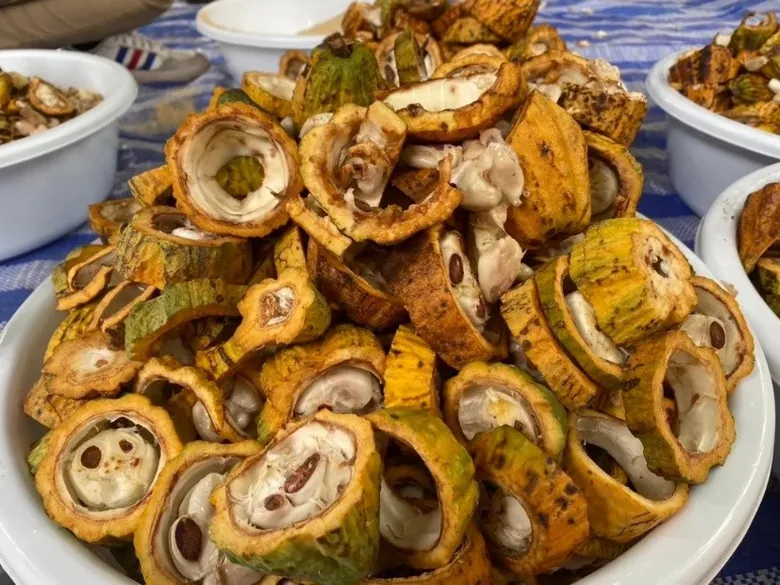
"Climate extremes have caused cocoa crop losses of as much as 80-90%. Intense heat and severe drought have resulted in undersized and diseased cocoa pods, while some pods that appear healthy on the outside are found to have germinated seeds inside," said Asst. Prof. Dr. Tansiphorn. "Low-grade cocoa like this cannot be fermented to produce high-quality cocoa that commands a good market price." She added that large quantities of rejected cocoa and cocoa husks left over from processing are often discarded in plantations, creating waste piles that can become breeding grounds for pests and disease.
Like cocoa farmers, cattle farmers also face severe challenges during the dry season, when shortages of animal feed force them to rely on expensive imported raw materials, further driving up production costs.
For Asst. Prof. Dr. Tansiphorn, the two problems appeared to offer a solution to one another. She recalled visiting cocoa processors and farmers in Prachuap Khiri Khan province, where the idea first emerged that discarded cocoa materials could potentially be transformed into value-added livestock feed.
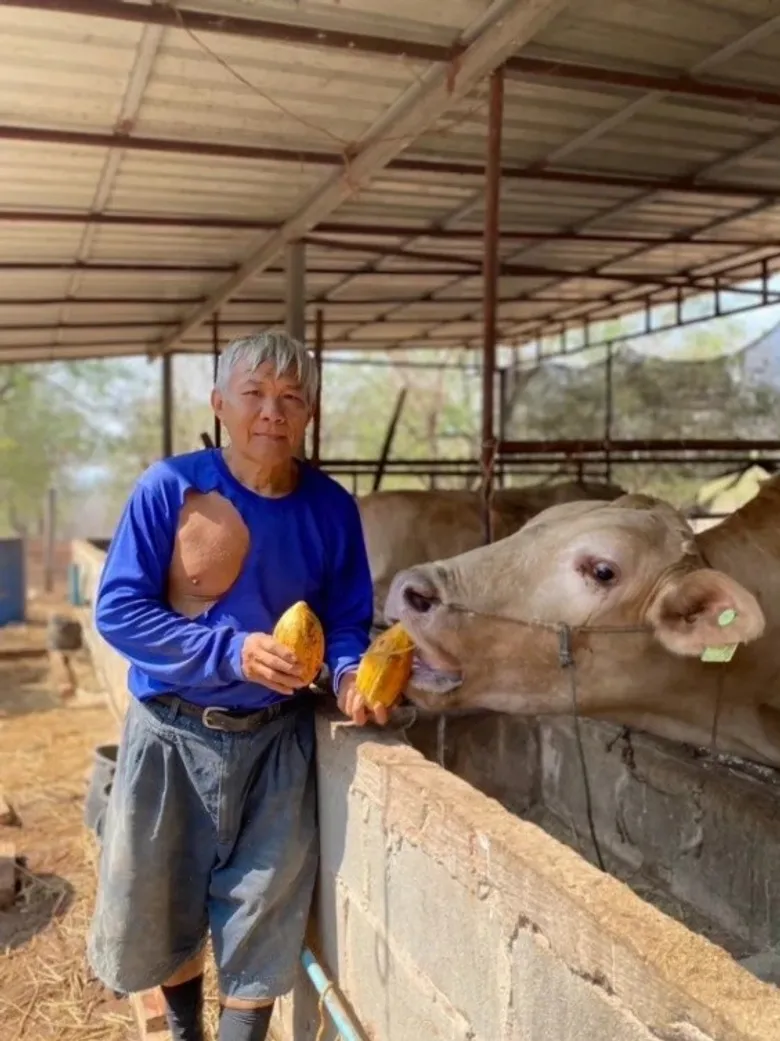
"At that time, as I was talking to entrepreneurs and farmers who processed cocoa beans, I wondered where the enormous amount of leftover cocoa husks after processing had gone. The farmers replied that the cocoa husks had been chopped up and fed to the cows, and they were found to be edible."
Drawing on insights shared by local entrepreneurs, Asst. Prof. Dr. Tansiphorn began further research of her own, reviewing scientific studies and related literature. She eventually found evidence confirming that agricultural waste from cocoa production could indeed be processed into livestock feed for cattle.
That marked the starting point for the development of an innovation that transforms low-grade cocoa products into animal feed. Asst. Prof. Dr. Tansiphorn later collaborated with Rajamangala University of Technology Lanna (RMUTL) to test the use of cocoa waste as livestock feed.
"Cattle consume large quantities of feed, making them an effective way to rapidly reduce the enormous volume of cocoa waste while providing a practical solution to the challenges faced by both sectors," she said.
"Lick Blocks" and Mineral Powder: Turning Cocoa Waste into Premium Feed for Grade-A Beef Cattle
Feeding fresh low-grade cocoa pods directly to cattle on a daily basis proved impractical due to management, labor, and procurement costs. Farmers had to spend considerable time and labor sourcing and preparing fresh cocoa for livestock, while transporting the bulky cocoa fruit to cattle farms created additional expenses.
To address these challenges, the research team sought a more cost-effective and farmer-friendly solution by enabling cocoa growers to process rejected cocoa products and leftover cocoa husks into powdered form.
"The process begins with farmers cutting and chopping cocoa waste into smaller pieces before drying it in the sun for around 7-14 days until completely dried. The dried material is then finely ground into powder. Farmers can then sell the cocoa powder to the center, which acts as an intermediary by purchasing the material and supplying it to certified animal feed factories. The factories process it into an innovative mineral supplement sold at a price comparable to the supplements farmers already use," explained Asst. Prof. Dr. Tansiphorn.
There are two forms of the innovative cocoa powder:
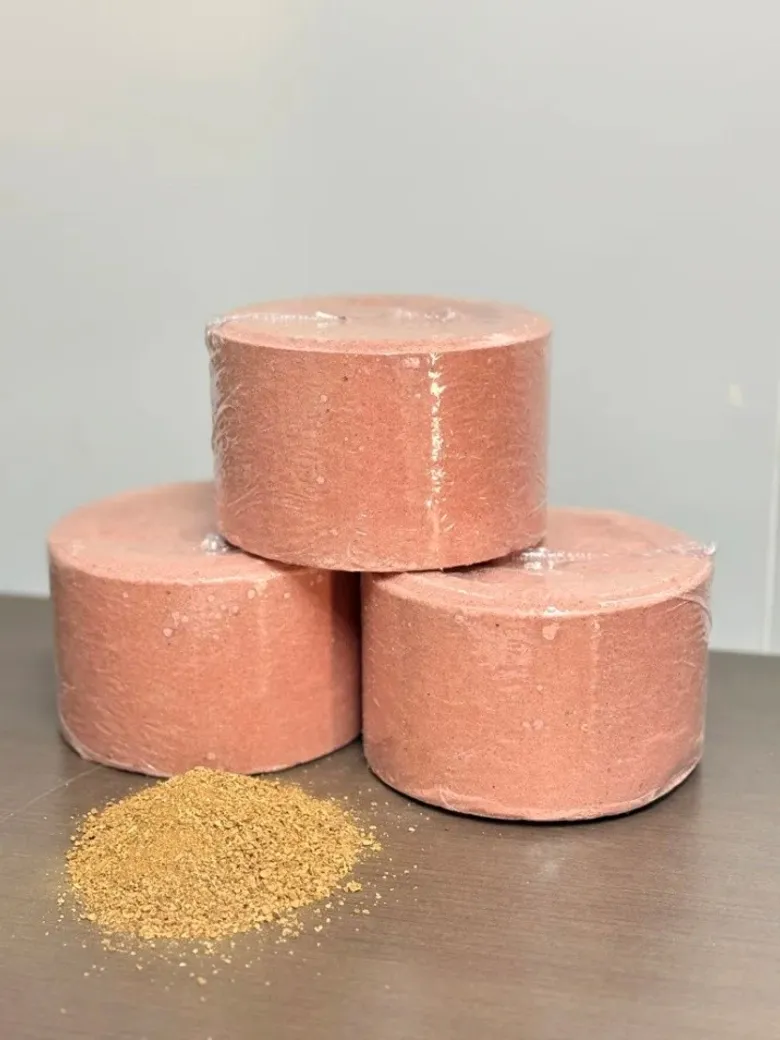
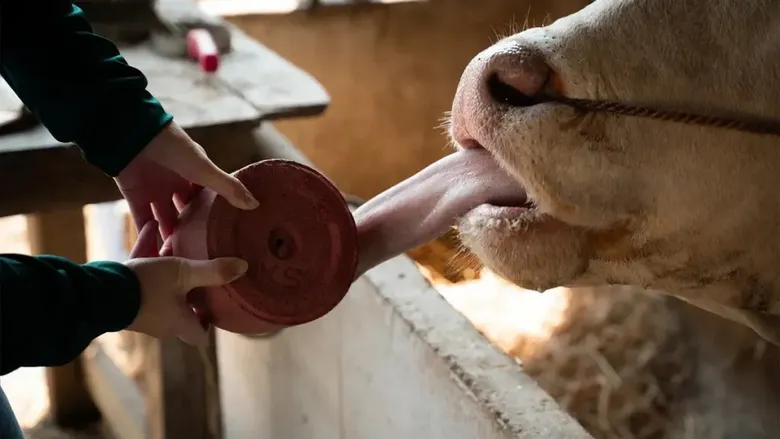
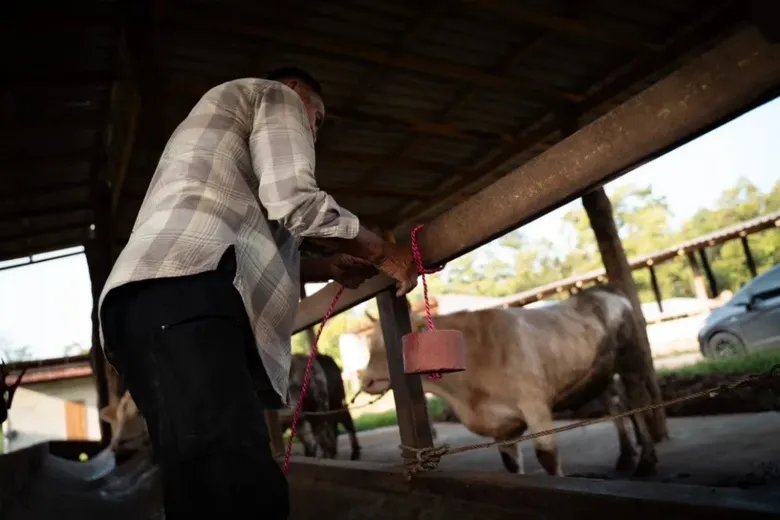
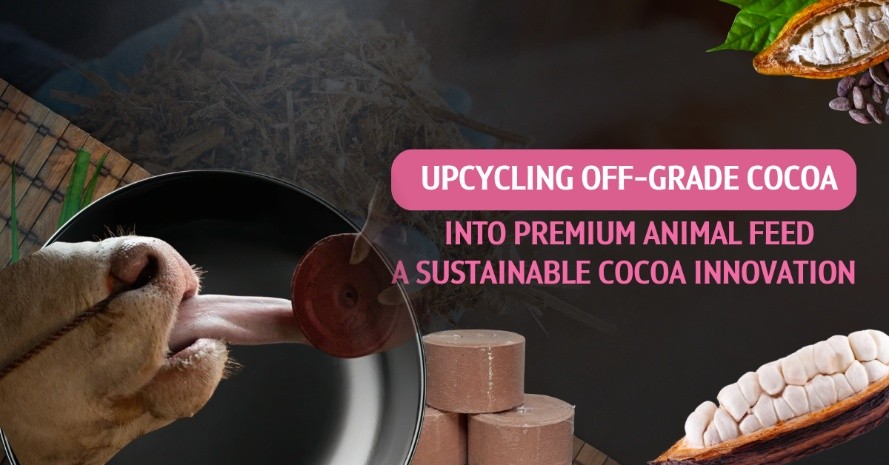
- The mineral block, or "lick block" is a compressed square-shaped cocoa powder supplement designed primarily for small-scale farms. Farmers simply hang the block in cattle pens for cows to lick freely. On average, one cow consumes about one mineral block per month.
- The powdered supplement is designed for larger farms that use feed-mixing systems, allowing it to be blended directly into animal feed. The natural aroma of cocoa also helps stimulate cattle's appetite, encouraging feed intake.
"Our research found that both forms of the mineral supplement can utilize all types of cocoa waste—including rejected cocoa pods and cocoa husks—as ingredients making up as much as 30% of the overall formulation," said Asst. Prof. Dr. Tansiphorn.
"Having cocoa waste account for such a large share of the ingredient formulation is a key factor in rapidly reducing the enormous waste piles accumulating on farms. It transforms what was once considered worthless agricultural waste into a valuable livestock feed supplement tangibly and sustainably."
Cocoa's Natural "Feel-Good" Compounds Promote Healthier Cattle
Beyond its ease of use, what makes this innovation particularly distinctive is the presence of beneficial compounds in cocoa that provide substantial health benefits for livestock.
"The cocoa-based mineral supplement helps stimulate feed intake in cattle, indicating improved well-being and greater comfort among the animals," explained Asst. Prof. Dr. Tansiphorn. "Our research found that this improved condition is linked to the presence of theobromine, a naturally occurring compound in cocoa that acts as a mood-enhancing stimulant in livestock."
Key Compounds in Cocoa That Support Cattle Health Include:
- Flavonoids and polyphenols help combat oxidative stress and maintain balance in the cow's rumen (the first compartment of the stomach).
- Theobromine, a naturally occurring compound found specifically in cocoa and often associated with mood enhancement, helps reduce inflammation, improve cattle well-being, and strengthen overall health. It also enhances feed efficiency, enabling cattle to convert feed into meat more effectively, grow faster, and require shorter rearing periods.
For dairy cattle, the compound has shown particular promise in reducing mastitis, a major issue that often leads to income deductions for farmers. Test results found that it reduced somatic cell counts—an indicator of inflammation—by more than 70%, while increasing milk fat content by up to 15%.
- Tannin: An important substance that inhibits the activity of the methanogenic bacteria in the bovine stomach. This group of bacteria binds carbon dioxide and water to form methane and then releases it through belching and flatulence. This bacterial inhibition can help reduce greenhouse gases by 44%. The energy previously lost to methane gas is then recovered to form fat and meat instead, giving the cow a better meat quality.
Upgrading Beef Quality and Increasing Income for Dairy Farmers
The effectiveness of both forms of the innovation was demonstrated not only in laboratories, but in real farming conditions—and the strongest validation came not from researchers, but from the farmers themselves.
"We encouraged farmers to collect data and test the mineral supplements themselves to build confidence in the innovation. This approach also helps promote the processing and utilization of cocoa waste."
Asst. Prof. Dr. Tansiphorn explained that dairy farmers routinely monitor somatic cell counts, a key indicator that directly affects their income. Elevated somatic cell levels signal mastitis, or udder inflammation, which can lead to deductions of income when they sell the milk. When cows develop mastitis, farmers are often required to isolate the animals and suspend milking, resulting in further income loss.
"But this innovation addresses the problem directly. Theobromine in cocoa helps reduce inflammation, leading to a more than 70% reduction in somatic cell counts. As a result, cows develop healthier udders, milk quality improves, and milk fat content increases significantly. During testing, we found that within just two weeks, milk fat levels rose dramatically from level 2 to level 7. This allows farmers to sell their milk at full price without income deductions," said Asst. Prof. Dr. Tansiphorn.
The results in beef cattle have been equally remarkable. Previously, farmers could sell ordinary red meat cattle for only around 20,000-30,000 baht per animal. However, after using the cocoa-based mineral supplement, the beef quality improved to premium A3 and A4 grades, increasing the market value to well over 100,000 baht per animal.
"The beef develops attractive marbling with none of the strong gamey odor often associated with beef. This makes it more appealing even to consumers who normally avoid beef because they cannot tolerate the smell."
Asst. Prof. Dr. Tansiphorn explained that the high level of marbling and the reduction of unpleasant odors are linked to the action of tannins, which suppress methane-producing bacteria in the rumen. Energy that would otherwise be lost through methane emissions from belching and flatulence is instead redirected toward the production of muscle and intramuscular fat. Combined with the action of theobromine, which helps keep cattle healthy and allows them to convert feed into meat more efficiently, the result is higher-quality beef."
She added that the innovation also helps create a compelling new narrative for Thai beef as "low-carbon beef" capable of competing in global markets through quality, not just price.
The Challenge: If Low-Grade Cocoa Can Be Sold, Will Farmers Abandon Quality?
As low-grade cocoa and discarded cocoa husks begin to gain market value, concerns have emerged over whether farmers might return to poorly managed cultivation practices, as seen in the past. Asst. Prof. Dr. Tansiphorn said the project has already anticipated this challenge through a pricing mechanism designed to incentivize quality production. "Well-maintained, high-grade cocoa suitable for chocolate production is purchased at 10-12 baht per kilogram, while low-grade cocoa is bought at only 1 baht per kilogram. Cocoa husks are purchased at around 0.25-0.50 baht per kilogram," she explained.
"With such a large gap in income, farmers naturally remain motivated to take the best possible care of their crops in order to achieve the highest market prices. At the same time, this model also serves as a safety net during times of crisis. Even when production falls short of expectations, cocoa waste can still be circulated back into the economy as a source of income under the circular economy model, rather than being discarded without value," added Asst. Prof. Dr. Tansiphorn.
Process Innovation Drives Behavioral Change Toward a Sustainable Agricultural Ecosystem
Although the "cocoa-based mineral supplement" innovation has demonstrated remarkable potential—from transforming agricultural waste into value-added products and upgrading beef quality to premium A4 grade, to reducing greenhouse gas emissions and significantly increasing farmers' incomes, the supplement is not a "miracle cure" or a quick win capable of instantly transforming farmers' livelihoods.
"We designed the cocoa supplement to serve as a 'catalyst' that encourages and motivates farmers to change the way they work," said Asst. Prof. Dr. Tansiphorn. "What we are really creating is a process innovation. Farmers who join the program and adopt our innovation must also implement systematic farm management practices and develop new approaches to livestock raising." She explained that many farmers previously relied on loosely managed, free-grazing method or a "buffet-style" approach which produced ordinary beef worth only around 20,000-30,000 baht per animal. The new system instead emphasizes careful management and attention to detail at every stage, shifting the focus toward genuinely quality-driven livestock production.
"The ultimate goal of this development goes far beyond cocoa supplements themselves. It is about transforming the entire ecosystem of Thailand's livestock industry. That includes reducing waste, leveraging the strengths of carbon credit systems, building compelling product narratives, and developing the entire production system together. This, rather than relying solely on low prices, is the right path toward strengthening Thai agriculture through value and quality—ultimately leading to better and genuinely sustainable livelihoods for Thai farmers."
"Every Cocoa Bean Must Have a Purpose" — Even in Shrimp Ponds
The "cocoa-based mineral supplement" is not limited to cattle farms. The innovation has also been extended to other types of livestock, including goats and poultry—particularly laying hens. Asst. Prof. Dr. Tansiphorn said published research has shown that compounds in cocoa can help preserve egg freshness for longer periods.
In addition, Asst. Prof. Dr. Tansiphorn is currently expanding the research into shrimp farming by studying the use of extracts from cocoa beans and cocoa husks in shrimp ponds, in collaboration with researchers from the Faculty of Veterinary Science, Chulalongkorn University.
"Shrimp is one of Thailand's most economically important livestock industries, with enormous market value," said Asst. Prof. Dr. Tansiphorn. "This new innovation focuses on strengthening shrimp immunity to help combat disease outbreaks, which can devastate shrimp ponds worth millions of baht in an instant." She added that the project is currently still in the research phase, with the goal of developing it into another tool to support shrimp farmers in the future.
Expanding Research on Cocoa Waste Reinforces the Principle That "Every Cocoa Bean Must Have a Purpose"
High-quality cocoa should be processed into chocolate to generate higher income for farmers, while low-grade cocoa and discarded cocoa husks can be transformed into mineral supplements for livestock and other animals. The approach reflects a circular economy model in which every part of the cocoa crop is utilized to create sustainable value across multiple sectors.
For further information, farmers and others interested in the "cocoa-based mineral supplement for livestock" can contact the Faculty of Integrated Agriculture, Chulalongkorn University, at Tel. 02 218 1243, or visit www.cusar.chula.ac.th.
Continue reading a full article on the website: https://www.chula.ac.th/en/highlight/410593/
"Chulalongkorn University sets the standard as a university of innovations for society and is listed in the World's Top 100 Universities for Academic Reputation, in the Quacquarelli Symonds (QS) World University Rankings 2021-2022, 2025-2026"