Experts Highlight the Critical Role of Rapid, Accurate Diagnostics in Ending Tuberculosis in Thailand
Roche Diagnostics (Thailand) Ltd., in collaboration with Roche Diagnostics Asia Pacific, hosted the 2nd Asia Pacific International Roche Infectious Diseases Symposium (APAC IRIDS 2026) under the theme "Shifting Paradigms, Transforming Outcomes." The symposium brought together infectious disease experts, healthcare professionals, policymakers, and key stakeholders from across the Asia-Pacific region to exchange knowledge and best practices. Discussions focused on the critical role of high-quality diagnostics, the adoption of innovative technologies, and cross-sector collaboration in improving public health outcomes.
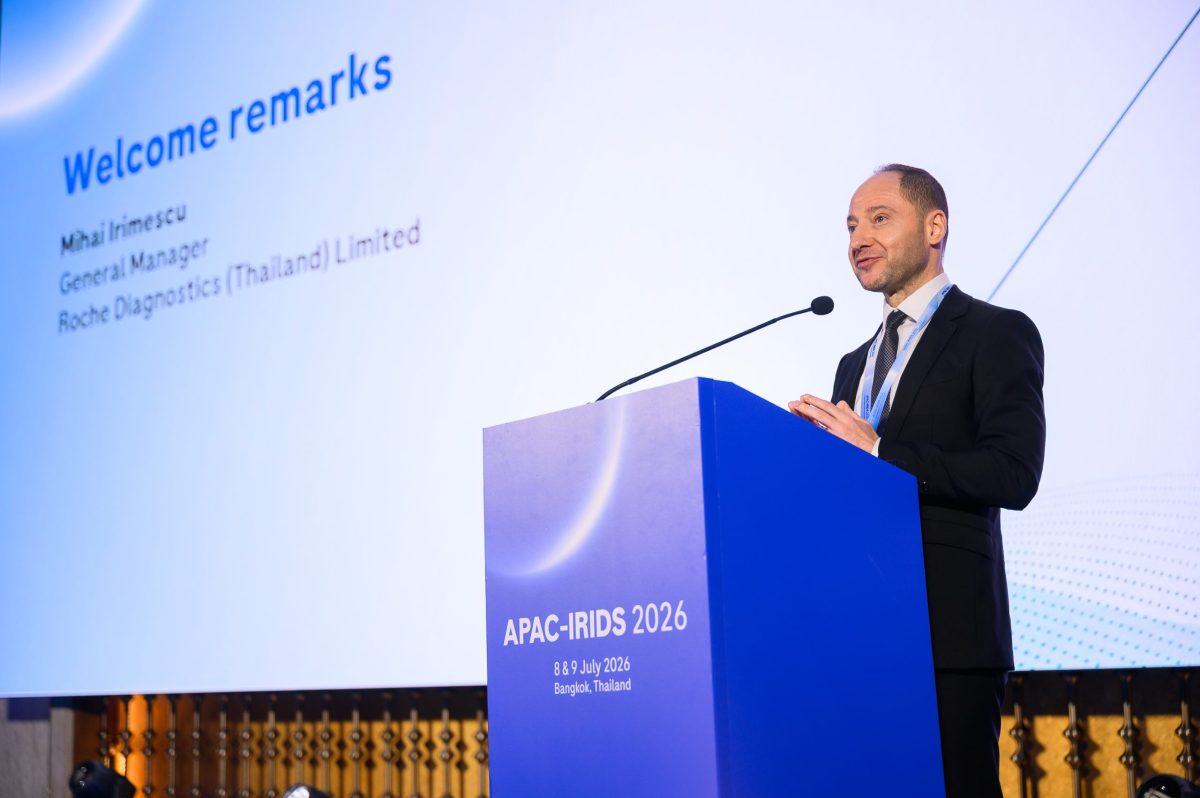
One of the key highlights of the symposium was the Diagnostics Media and Policy Forum, where leading regional experts engaged in an in-depth discussion on tuberculosis (TB). The disease remains a major public health challenge, with the Asia-Pacific region accounting for more than 60% of all new TB cases worldwide, placing it at the forefront of global efforts to end TB. Although TB is both preventable and curable, the latest data show that approximately 2.4 million people worldwide remain either undiagnosed or unreported to national health systems. As a result, many patients do not receive timely treatment and continue to transmit the disease within their communities. Experts emphasized that early case detection and access to effective diagnostic testing are critical to reducing transmission and improving treatment outcomes.
Mihai Irimescu, General Manager of Roche Diagnostics (Thailand) Ltd., said, "Infectious diseases continue to pose a significant public health challenge across the Asia-Pacific region. Addressing these challenges requires close collaboration among all stakeholders, alongside broader access to high-quality diagnostic technologies. APAC IRIDS 2026 reflects Roche Diagnostics' commitment to fostering knowledge exchange among experts, with the shared goal of advancing patient care and strengthening healthcare systems across the region."
During the symposium, Dr. Phalin Kamolwat, MD, Director of Principal Recipient Administrative Office, Department of Disease Control Ministry of Public Health, Thailand, shared an overview of the tuberculosis (TB) situation in Thailand and highlighted the country's key challenges. According to estimates by the World Health Organization (WHO), Thailand has an estimated TB incidence of approximately 146 cases per 100,000 population, equivalent to around 100,000 new TB cases each year. Although the incidence has continued to decline, the pace remains insufficient to achieve the WHO End TB Strategy targets of reducing TB incidence by 80% and TB-related deaths by 90% by 2030 . Dr. Phalin emphasized that tackling TB in Thailand today requires more than effective treatment alone. Equal priority must be given to expanding access to accurate diagnostic testing, strengthening active case finding, and ensuring that patients are rapidly linked to appropriate care and treatment.
Dr. Phalin said, "Although tuberculosis is both preventable and curable, Thailand remains among the countries classified by the World Health Organization (WHO) as having a high TB burden. This reflects the fact that a significant number of people with TB remain undiagnosed or experience delays in accessing treatment, allowing the disease to continue spreading within households, communities, and workplaces. Accelerating active case finding, expanding access to rapid, accurate, and quality-assured diagnostic testing, and ensuring timely linkage to treatment are therefore essential to strengthening TB control in Thailand. Beyond caring for patients with active TB, Thailand also places strong emphasis on identifying and treating latent tuberculosis infection (LTBI), particularly among high-risk groups such as household contacts of TB patients, people living with HIV, young children, and individuals with compromised immune systems. Treating LTBI is a key preventive measure that helps reduce the risk of developing active TB, lowers the number of new cases, and contributes to breaking the chain of transmission. Thailand is continuing to strengthen its national TB response by expanding the use of WHO-recommended molecular diagnostic technologies, leveraging digital technologies and artificial intelligence (AI) to improve case detection, and promoting TB awareness while reducing stigma. Achieving sustainable progress toward the WHO's End TB targets will require close collaboration across all sectors to ensure that people can access timely diagnosis and treatment."
In addition, tuberculosis experts from across the Asia-Pacific region shared insights and experiences on advancing TB control efforts in their respective countries. They agreed that achieving the World Health Organization's (WHO) End TB Strategy targets requires a comprehensive approach—one that not only accelerates the detection and treatment of people with active TB, but also expands the identification and treatment of latent tuberculosis infection (LTBI) to prevent progression to active disease in the future.
Experts noted that approximately one in four people worldwide—or around 25% of the global population—are estimated to have latent tuberculosis infection (LTBI). While these individuals do not have symptoms and cannot transmit the disease, those with weakened immune systems, such as household contacts of TB patients, people living with HIV, young children, and individuals with certain underlying medical conditions, face a significantly higher risk of developing active TB. Experts emphasized that expanding the identification and preventive treatment of people with LTBI could substantially reduce the number of new TB cases and help break the chain of transmission.
On the diagnostics front, experts also discussed recent advances in the detection of latent tuberculosis infection (LTBI), a key component of the WHO End TB Strategy. In addition to the long-established Tuberculin Skin Test (TST), newer diagnostic approaches are being adopted more widely, including Interferon Gamma Release Assays (IGRAs) and TB antigen-based skin tests (TBSTs). These tests generally offer higher specificity than TST—particularly among individuals who have received the BCG vaccine—and provide additional options for screening LTBI across different healthcare settings and population groups.
The World Health Organization (WHO) recommends that countries select the most appropriate testing method based on their healthcare system, target population, and available resources. According to WHO guidance, both Interferon Gamma Release Assays (IGRAs) and TB antigen-based skin tests (TBSTs) are considered effective and comparable options for detecting latent tuberculosis infection (LTBI).
For the diagnosis of active tuberculosis, experts emphasized the importance of using nucleic acid amplification tests (NAATs/PCR) as the initial diagnostic test, in line with the World Health Organization's (WHO) recommendation for Rapid Molecular Diagnostics (WRDs). These tests enable the rapid detection of TB and drug resistance, allowing patients to receive appropriate treatment at an early stage, reducing transmission, and improving treatment outcomes. Experts noted that this is particularly important as drug-resistant TB continues to pose a major global public health challenge. Currently, an estimated two-thirds of people with drug-resistant TB worldwide remain undiagnosed, meaning many are treated with standard drug regimens that are ineffective against resistant strains. This not only delays effective treatment but also contributes to the ongoing transmission of drug-resistant TB within communities.
Experts also encouraged countries to leverage the significant investments made in molecular laboratory infrastructure during the COVID-19 pandemic to strengthen tuberculosis diagnostics. They further highlighted the importance of developing real-time digital data and surveillance systems to improve disease monitoring, enhance case detection, and support more efficient and sustainable TB control efforts.
In addition to the scientific programme, the symposium also featured a patient perspective session. "Jugg" Chawin Chitsomboon, an artist, singer, musician, and TB survivor, shared his personal journey of living with the disease, the impact it had on his life, and the importance of receiving timely diagnosis and treatment. His story underscored the need to raise public awareness, reduce stigma and discrimination against people affected by TB, and encourage individuals at risk or experiencing symptoms to seek testing as early as possible.
Jugg Chawin Chitsomboon said, "When I first learned that I had tuberculosis, I was shocked and worried because there are still many misconceptions surrounding the disease. However, after receiving a timely diagnosis and proper treatment, I became confident that TB can be cured when detected early and when patients adhere to their medication regimen. What I would like to share with everyone is that fear and stigma should not become barriers to seeking testing. Early detection and early treatment not only help patients recover, but also prevent transmission and protect the people we care about."
APAC IRIDS 2026 reflects a commitment to strengthening collaboration among experts, healthcare professionals, policymakers, the private sector, and civil society to exchange knowledge and promote the application of diagnostic innovations in addressing infectious diseases, particularly tuberculosis. These collective efforts will play a vital role in expanding access to diagnostic services, enabling timely treatment, and improving long-term public health outcomes across Thailand and the Asia-Pacific region.