Fujitsu announced that it has started research and development towards a superconducting quantum computer with a capacity exceeding 10,000 qubits, with construction slated for completion in fiscal 2030. Development activities will be carried out in part under a NEDO project to advance the development of quantum computers towards industrialization.
The new superconducting quantum computer will operate with 250 logical qubits and will utilize Fujitsu's innovative "STAR architecture," an early-stage fault-tolerant quantum computing (early-FTQC) architecture, also developed by the company. Fujitsu aims to make practical quantum computing possible, particularly in areas like materials science where complex simulations can unlock groundbreaking discoveries, and, to this end will focus on advancing key scaling technologies across various technical domains.
As part of this effort, Fujitsu has been selected as an implementing party for the "Research and Development Project of the Enhanced Infrastructures for Post-5G Information and Communication Systems", publicly solicited by the NEDO (New Energy and Industrial Technology Development Organization). Fujitsu will be contributing to the thematic area of advancing the development of quantum computers towards industrialization. The project will be promoted through joint research with Japan's National Institute of Advanced Industrial Science and Technology (AIST) and RIKEN, and will run until fiscal year 2027.
Fujitsu is committed to driving forward the development of practical and industrialized quantum computing solutions. After this 10,000-qubit machine is built, Fujitsu will further pursue advanced research initiatives targeting the integration of superconducting and diamond spin-based qubits from fiscal 2030 and aims to realize a 1,000-logical-qubit machine in fiscal 2035 while considering the possibility of multiple interconnected quantum-bit chips.
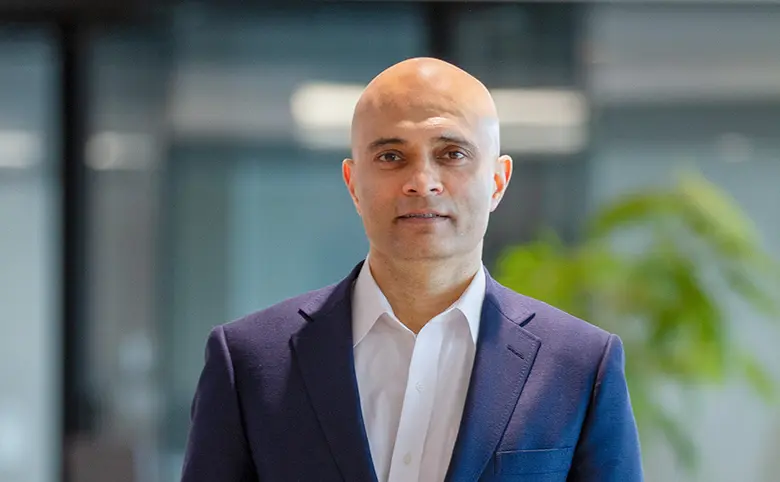
Vivek Mahajan, Corporate Executive Officer, Corporate Vice President, CTO, in charge of System Platform, Fujitsu Limited, comments "Fujitsu is already recognized as a world leader in quantum computing across a broad spectrum, from software to hardware. This project, led by NEDO, will contribute significantly to Fujitsu's goal of further developing a Made-in-Japan fault-tolerant superconducting quantum computer. We also aim to combine superconducting quantum computing with diamond spin technology as part of our roadmap. By realizing 250 logical qubits in fiscal 2030 and 1,000 logical qubits in fiscal 2035, Fujitsu is committed to leading the path forward globally in the field of quantum computing. Additionally, Fujitsu will be developing the next generation of its HPC platform, using its FUJITSU-MONAKA processor line, which will also power FugakuNEXT. Fujitsu will further integrate its platforms for high-performance and quantum computing to offer a comprehensive computing platform to our customers."
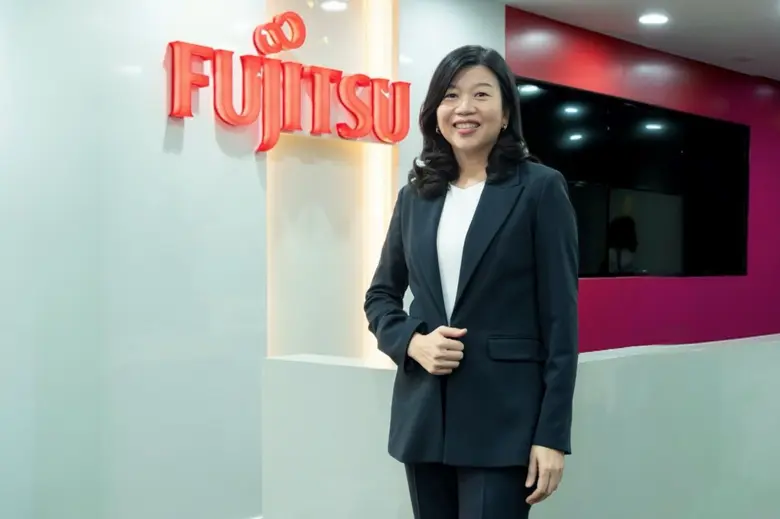
Ms. Kanokkamon Laohaburanakit, Managing Director of Fujitsu (Thailand) Co., Ltd., commented "Fujitsu's plus-10,000-qubit quantum computer has the potential to revolutionize various industries around the world, including Thailand. This technology will have profound impacts across multiple sectors, particularly in materials science, where we aim to realize practical quantum computing by around 2035"
Technology development focus areas
Fujitsu's research efforts will focus on developing the following scaling technologies.
- High-throughput, high-precision qubit manufacturing technology: Improvement of the manufacturing precision of Josephson Junctions, critical components of superconducting qubits which minimize frequency variations.
- Chip-to-chip interconnect technology: Development of wiring and packaging technologies to enable the interconnection of multiple qubit chips, facilitating the creation of larger quantum processors.
- High-density packaging and low-cost qubit control: Addressing the challenges associated with cryogenic cooling and control systems, including the development of techniques to reduce component count and heat dissipation.
- Decoding technology for quantum error correction: Development of algorithms and system designs for decoding measurement data and correcting errors in quantum computations.
Background
The world faces increasingly complex challenges that demand computational power beyond the reach of traditional computers. Quantum computers offer the promise of tackling these previously intractable problems, driving significant advancements across numerous fields. While a fully fault-tolerant quantum computer with 1 million qubits of processing power is considered the ultimate goal, Fujitsu is focused on delivering practical solutions in the near term.
Fujitsu's commitment to quantum computing is underscored by its ongoing R&D efforts. In August 2024, in collaboration with the University of Osaka, Fujitsu unveiled its STAR architecture, a highly efficient quantum computing architecture based on phase rotation gates. This architecture paves the way for early-FTQC systems capable of outperforming conventional computers with only 60,000 qubits. On the hardware front, the RIKEN RQC-Fujitsu Collaboration Center, established in 2021 with RIKEN, has already yielded a 64-qubit superconducting quantum computer in October 2023, followed by a world-leading 256-qubit system in April 2025.
Scaling to even larger systems requires overcoming challenges such as maintaining high fidelity across multiple interconnected qubit chips and achieving greater integration of components and wiring within dilution refrigerators. In addition to its superconducting approach, Fujitsu is also exploring the potential of diamond spin-based qubits, which use light for qubit connectivity. Fujitsu is conducting research in this area in collaboration with Delft University of Technology and QuTech, a leading quantum technology research institute, which has resulted in the successful creation of highly accurate and controllable qubits.
 AUMOVIO's projection solution turns the cockpit into a canvas
 From Global Successes to Local Action How Thailand Can Transform Flood Risk Management
 SafeShell VPN Launches Breakthrough "App Mode": Letting Users Access Multiple Regions Simultaneously Without Switching Servers
 NTT DOCOMO GLOBAL and CP Group company, Ascend Commerce Agree to Form Strategic Capital Alliance
 Absolute Hotel Services Launches Absolute Culinary Collective to Transform Hotel Dining
 GPSC Advances Clean Energy Innovation Through Strategic Collaboration with Polytechnology and Huawei Digital Power
 BioActive+ Launches Thailand's First Edible Keratin: "Concentrated Liquid KERA" for True Beauty from Within
 Hitachi Energy: Driving Thailand's Energy Transition to Net Zero