
Ministry of Public Health Unites All Sectors to Advance Lung Health in Thailand - newswit
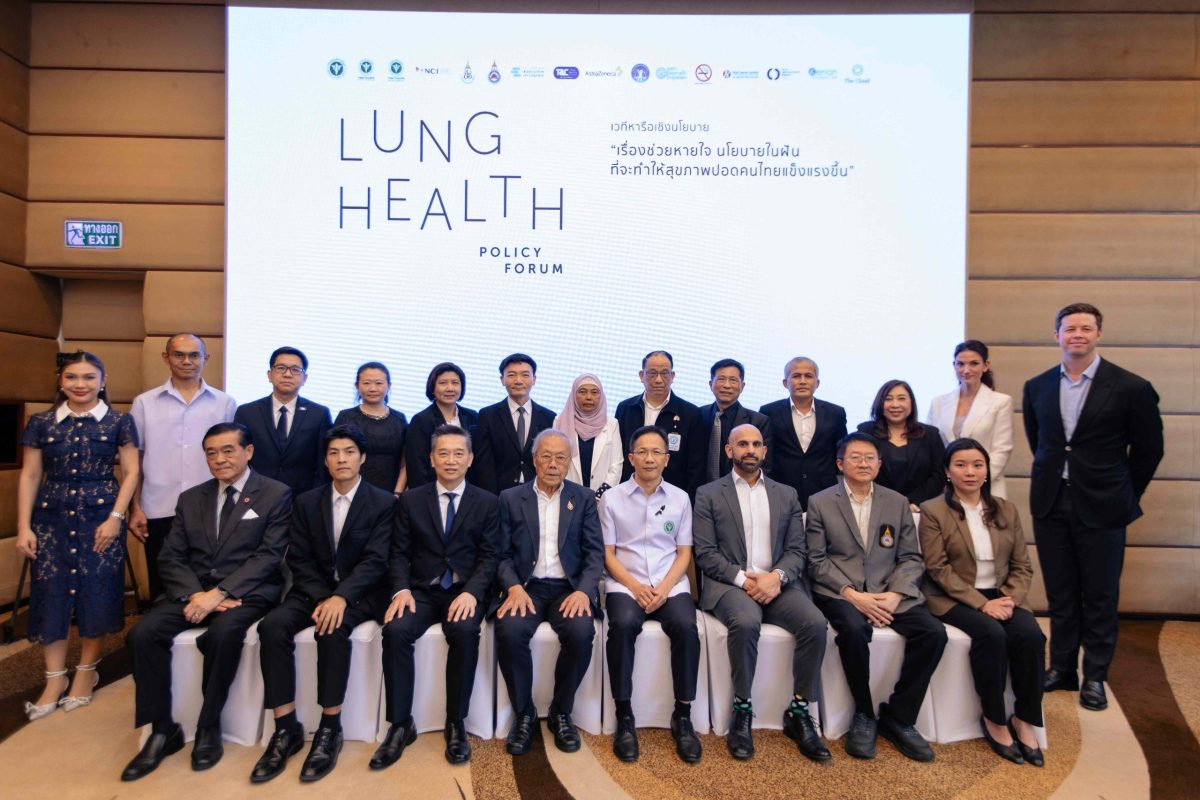
The Department of Medical Services, Ministry of Public Health, has joined forces with all parties to advance Thailand's lung health agenda through the "Lung Health Policy Forum: Breathing Matters - A Policy Vision for Stronger Lung Health for Thai People". The forum aims to accelerate action on lung cancer and chronic obstructive pulmonary disease (COPD), while promoting equitable access to innovative screening and treatment from the earliest stages of disease. The initiative seeks to sustainably improve the quality of life of Thai patients and strengthen the country's lung health system.
According to the World Health Organization (WHO), the global number of new cancer cases is projected to rise from approximately 20 million to nearly 35 million annually by 2050. Asia accounts for more than half of all cancer cases worldwide, and lung cancer remains the leading cause of cancer death globally, including in Thailand. To address these challenges, WHO has outlined three key strategic priorities - Better Capabilities, Better Protections, and Better Value - to strengthen health systems, protect patients, and maximize the value of innovation and research while ensuring equitable access to effective treatment.
In Thailand, lung cancer is not the only major concern. Chronic obstructive pulmonary disease (COPD) also poses a significant public health challenge, claiming more than 20,000 Thai lives each year. This reflects the country's substantial respiratory disease burden of and underscores the urgent need to strengthen prevention, enhance early detection, and ensure timely access to treatment.
Advancing the National Cancer Act Toward a Comprehensive Cancer Care System
Dr. Nattapong Wongwiwat, Director-General of the Department of Medical Services and Chair of the forum, said that the Ministry of Public Health places high importance on strengthening lung health and comprehensive cancer care nationwide. He noted that the National Cancer Institute is currently studying the draft National Cancer Act and the establishment of a National Cancer Policy Committee, to be chaired by the Minister of Public Health, in order to develop effective national strategies for cancer prevention and management.
He added that the forum reflects perspectives from multiple sectors, from frontline practitioners to policymakers, and serves as an important opportunity to present key information to decision-makers. Urgent priorities include health databases across public and private hospitals, patient data to suport screening and access to treatment, as well as workforce data to health workforce planning in line with local service needs. This should be accompanied by workforce management measures to ensure continuity across diagnosis, treatment, and referral pathways between community hospitals and referral centers.
Participants also emphasized the need for clear financing arrangements, timely budget disbursement, and transparent criteria for access to medicines and medical technologies based on disease severity. Evidence-based data should remain the foundation of policy development, with implementation potentially expanding beyond lung cancer to cover other lung diseases and broader disease burdens in the future.
Early Detection: A Critical Turning Point in Reducing Lung Cancer Mortality
Assoc. Prof. Kamon Kawkitinarong, M.D., President of the Thoracic Society of Thailand under Royal Patronage, highlighted the severity of lung cancer, noting that it remains the leading cause of death among Thais, claiming more than 20,000 lives annually. Although treatment innovations have advanced and improved patients' chances of survival, Thailand still faces a high mortality rate because one of the key challenges is that the disease often shows no symptoms in its early stages.
At the same time, the profile of lung cancer patients is changing. The disease is no longer confined to smokers. Research has shown increasing numbers of cases among women and younger people who have never smoked, with EGFR gene mutations found in 50-60% of patients. Alarmingly, more than 70% of lung cancer patients in Thailand are diagnosed only after the disease has already advanced, highlighting the urgent need to strengthen screening and early detection efforts.
Prof. Thanyanan Baisamut, M.D., Medical Oncologist and Lung Cancer Specialist at the Faculty of Medicine Ramathibodi Hospital, Mahidol University, stressed that lung cancer is a health issue that deserves attention from everyone, particularly people at higher risk or those with a history of smoking. She recommended Low-Dose CT (LDCT) screening to increase the likelihood of detecting lung cancer at an early stage. Today, treatment options have become far more advanced and precise, including surgery, multidisciplinary care, targeted therapies, and immunotherapy, enabling more personalized treatment for each patient.
She also advised that anyone experiencing warning signs such as a persistent cough, weight loss, fatigue, chest pain, or respiratory abnormalities should promptly seek medical attention at a nearby healthcare facility for proper assessment. The earlier lung cancer is detected, the greater the chance of successful treatment or disease control.
Expanding Lung Function Screening to Reduce the Burden of Chronic Lung Disease
Assoc. Prof. Dr. Watchara Boonsawat, President of the Easy Asthma and COPD Clinic Network (EACC), stated that one of the key challenges in asthma and COPD care is that many patients only become aware of their conditions when symptoms have already become severe. Limited awareness and inadequate access to lung function testing often delay diagnosis, leading to greater lung damage and reduced treatment effectiveness, yet these conditions can be effectively managed and controlled when detected early.
COPD remains one of the leading causes of death among Thais, claiming more than 20,000 lives every year. This highlights the urgent need to raise public awareness and expand access to screening so that patients do not unnecessarily progress to severe disease.
He noted that lung function screening can begin with simple tools such as a peak flow meter, which is affordable and can be used at home to monitor symptoms. This is especially relevant for people at risk, such as smokers, those exposed to pollution or PM2.5, and those experiencing symptoms such as chronic cough, shortness of breath, or wheezing. Early screening and continuous follow-up can help patients receive appropriate treatment in time rather than waiting until severe exacerbations occur.
Mobilizing All Sectors to Shape Thailand's Lung Health Policy
The forum brought together experts from across sectors to exchange views and develop policy recommendations to improve lung health in Thailand. Participants included representatives from government agencies, healthcare professionals, academia, civil society, patient networks, and health partners. They shared a common goal of building a comprehensive lung healthcare system spanning prevention, screening, diagnosis, treatment, and systematic long-term care, while reducing inequities in access to health services and improving the quality of life of Thai patients.
Meanwhile, the Thai Cancer Society and the Lung Cancer Friends Club amplified the voices of patients and their families, calling for equitable treatment rights and the right to access comprehensive lung health screening for all population groups. They emphasized that the profile of lung cancer patients has changed significantly. The disease is no longer limited to older adults or smokers but is also increasingly seen in younger people, women, otherwise healthy individuals, and those who have never smoked. This reinforces that lung cancer is a serious issue that everyone should be aware of and should not ignore.
Participants agreed that now is the time for all sectors to turn the forum's recommendations into concrete action and implementation plans. This includes strengthening public awareness, expanding screening opportunities for at-risk populations, and ensuring that patients can access innovative treatments equitably, in a timely manner, and fairly. By increasing early detection, reducing preventable loss, and strengthening Thailand's lung health system over the long term, the country can build a healthier future for all.
Today, lung cancer and COPD are no longer distant concerns, and equitable access to screening and treatment is a critical step toward protecting the lung health of all Thai people.


