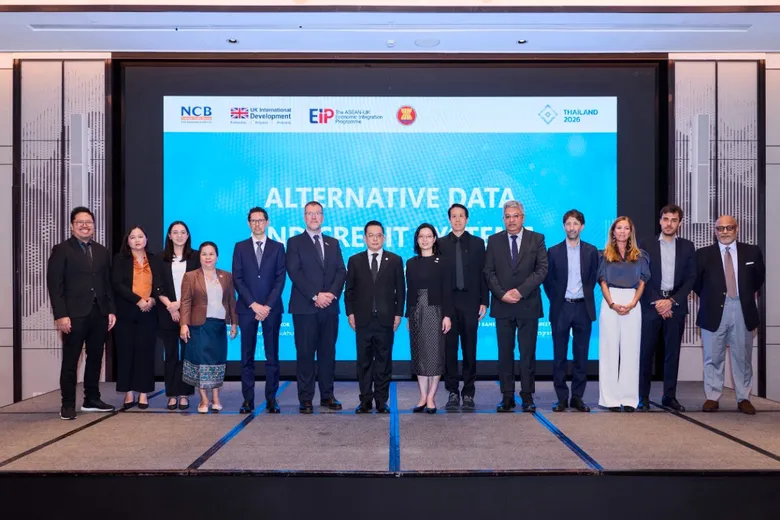
National Credit Bureau of Thailand and ASEAN-UK Economic Integration Programme Convene Policy Dialogue on Alternative Data and Credit Systems to Advance Inclusive and Sustainable Finance in ASEAN
As ASEAN's digital economy continues to grow, alternative data is emerging as a promising tool to expand access to finance for businesses that remain underserved by traditional credit systems.
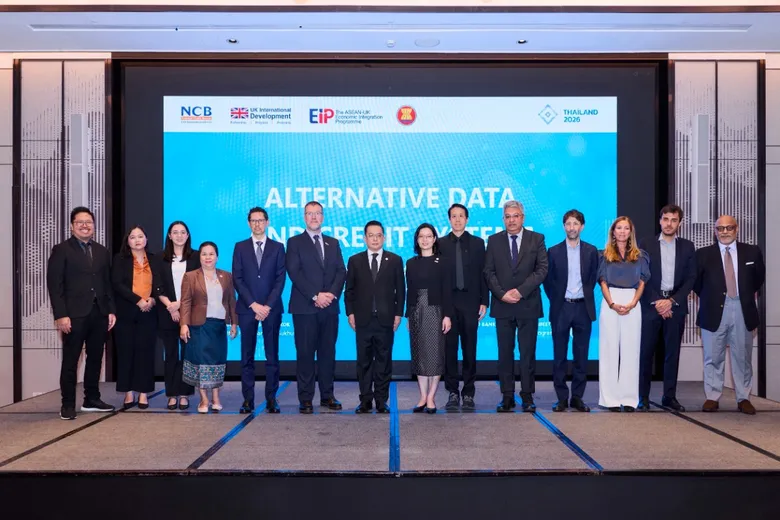
To explore this opportunity, policymakers, regulators, Credit Bureaus in ASEAN, financial institutions, digital platforms and development partners from across ASEAN gathered today in Bangkok for the "Alternative Data and Credit Systems: A Policy Dialogue on Building Sustainable and Inclusive Financial Systems," jointly hosted by the National Credit Bureau (NCB) Thailand and the ASEAN-UK Economic Integration Programme (EIP), as an affiliated programme of the IMF-World Bank Group Annual Meetings 2026.
Digitalisation is reshaping ASEAN's economies as new sources of information are emerging through digital payments, e-commerce, fintech services and online platforms. These sources create opportunities to improve access to finance, particularly for micro, small and medium-sized enterprises (MSMEs). Lack of data is no longer the challenge, according to participants. It is about how information can be connected, trusted and used responsibly to strengthen credit systems, support informed lending decisions and advance sustainable financial inclusion.
"Alternative data can provide additional insights into borrowers' creditworthiness. This is particularly relevant for low-income individuals, informal workers and MSMEs with limited credit histories. Payment records and business transaction data can complement existing credit information and give lenders a clearer picture of borrowers' repayment capacity. This can support better-informed and more responsible lending decisions. Thailand is currently promoting the use of the MOF Data Lake and Ari Score to support alternative data use in credit risk assessment. These initiatives can help more individuals and businesses access suitable credit and participate in the formal financial system. This should be supported by transparency, responsible data use and appropriate safeguards to ensure that alternative data contributes to broader access to credit," said Dr. Vinit Visessuvanapoom, Director-General of the Fiscal Policy Office, Ministry of Finance, Thailand.
"As the financial landscape across ASEAN continues to evolve, credit information systems need to adapt to changing economic behaviours and the emergence of new data sources. Alternative data can complement existing credit information and support a more comprehensive approach to credit assessment, particularly for MSMEs and individuals with limited credit histories. However, as these new sources of data are increasingly incorporated into credit assessment, data reliability and the accuracy of data processing remain critical. NCB is committed to promoting the responsible use of data to enhance credit assessment, expand access to financial services, and contribute to a more resilient financial system over the long term," said Dr. Luxmon Attapich, CEO of National Credit Bureau (NCB) Thailand.
The dialogue focused on a growing regional priority: ensuring that the benefits of digital transformation translate into broader access to finance, while upholding strong standards for consumer protection, data governance and market integrity. For many MSMEs, valuable economic activity remains only partially reflected in in conventional credit reporting systems. When used responsibly, alternative data, including payment records, merchant activity and platform-based information, can complement traditional credit information by providing a more complete picture of creditworthiness.
"Alternative data can help expand access to finance by improving the visibility of businesses, particularly MSMEs, that may be overlooked by conventional assessment approaches. Its long-term value, however, depends on how effectively it is integrated into broader credit information systems that support responsible lending, consumer protection, and financial sector stability," said Mr. Francesco Strobbe, Practice Manager - Finance, Competitiveness & Innovation, World Bank Group
A key theme of the discussions was the shift from data scarcity to data fragmentation. While relevant information increasingly exists across banks, credit bureaus, payment systems, digital lenders and platform ecosystems, it often remains siloed, limiting credit visibility for otherwise viable borrowers. Participants therefore explored how alternative data can complement established credit information frameworks, enabling stronger credit assessment, greater financial inclusion and enhanced financial-sector resilience.
"Alternative data can help unlock new opportunities for MSMEs, but technology alone is not enough. Lasting impact requires strong governance, consumer trust and regulatory frameworks that evolve alongside innovation while reflecting local market conditions," said David Thomas, Deputy Head of Mission, British Embassy Bangkok.
As part of its support for ASEAN economic integration and financial inclusion, the EIP through the Financial Services Pillar is supporting regional research and policy dialogue on alternative data and MSME finance. "Alternative data has the potential to strengthen credit ecosystems and expand access to finance. By bringing together ASEAN and international experience, we hope that this initiative allows the exploration of practical and responsible approaches that respond to the different needs and circumstances of countries across the region," said Ms. Katja Silva-Leander Managing Director Cadmus International UK Limited
Discussions highlighted the importance of interoperability, strong data governance, regulatory readiness and supervisory visibility in ensuring that innovation translates into sustainable credit outcomes. Participants explored how alternative data and shared credit information can help MSMEs not only gain initial access to finance but also build portable financial histories that support long-term participation in the formal financial system.
By bringing together diverse stakeholders from across the financial ecosystem, the Policy Dialogue reinforces a shared commitment to harnessing innovation to expand access to finance while strengthening credit systems, market resilience and consumer trust. As ASEAN's digital economy grows, strong credit information systems will be critical to helping businesses and consumers participate fully and responsibly in the region's economic growth.