Galaxy-Silicon Tech Park Hosts Open House to Showcase AI-Era Data Center Standards, Championing Clean Energy and 80% Water Recycling Alongside the Ban Chang Community
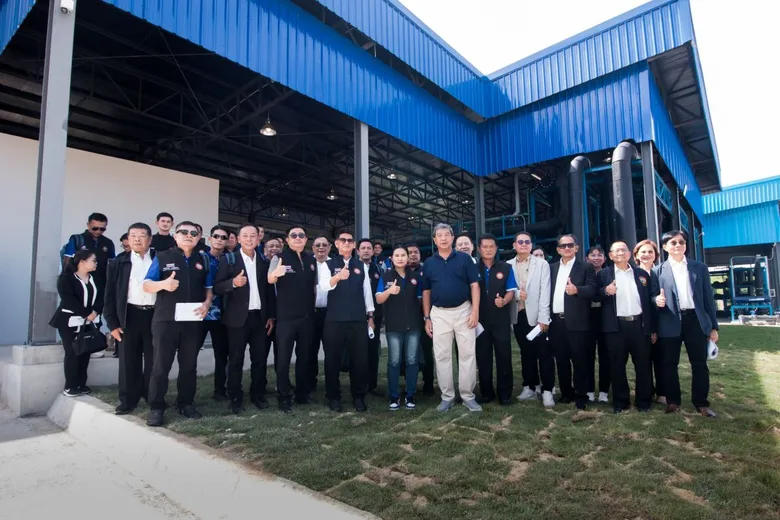
Galaxy Data Center, in collaboration with Silicon Tech Park (STP), opened its project site in Ban Chang District, Rayong Province, for an Open House event welcoming over 50 representatives from the Provincial Administrative Organization (PAO) and Local Administrative Organizations (LAOs), alongside key figures and national media. The event allowed attendees to closely inspect the project's infrastructure and environmental measures, turning community concerns into empirical proof while driving the establishment of the "Ban Chang Community Council" to create a sustainable data center model that grows alongside the local people.
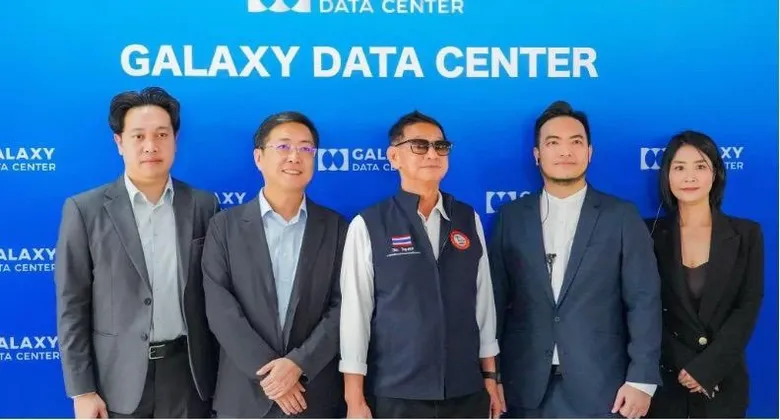
Mr. Korravat Sukavat, Director of Government Relations and Public Affairs at Galaxy Data Center, revealed that this Open House builds upon previous public hearing forums, focusing on practical implementation under the concept of "Listen - Inspect - Resolve - Report" to foster transparency and build confidence among the people of Rayong.
"We want to open up our space for local leaders and community representatives to witness our entire operational system firsthand--whether it involves water usage, electricity consumption, noise control, waste management, or safety. We hope this Open House will help the community gain a clearer understanding of the project's construction and environmental management measures through transparent communication that addresses concerns and concrete actions that build trust. We are committed to collaborating with the Ban Chang community to achieve long-term sustainable development," Mr. Korravat stated.
Mr. Piya Pitutacha, Chief Executive of the Rayong Provincial Administrative Organization (PAO), said, "Today, the Rayong PAO and local leaders had the opportunity to inspect the actual operational systems across all five stations. I would like to thank the project for transparently opening the site so we could examine the concerns of the Ban Chang residents regarding water, noise, waste, and safety. The 80% water recycling technology and closed-loop cooling system significantly alleviate concerns about competing with local residents for water resources. Particularly commendable is the signing of a cooperation agreement between the Rayong PAO and Silicon Tech Park Co., Ltd. to purchase electricity from the Rayong PAO's waste-to-energy power plant, which simultaneously helps solve the province's environmental issues. Going forward, the PAO and the Ban Chang Community Council will continue to monitor and inspect these standards to ensure that this world-class investment grows alongside job creation and income generation without negatively impacting the people of Rayong, ensuring true sustainability."
During the visit, the project showcased five key stations demonstrating the engineering standards and resource management of a next-generation data center:
- Water Treatment & Recycling SystemSilicon Tech Park and Galaxy demonstrated their Water Usage Effectiveness (WUE) through a two-part water management system:
- Water Production System: Utilizing coarse and fine filtration technologies capable of producing a high yield of clean water relative to the intake water to supply the facility.
- Water Reclamation System (UFRO): Treating effluent from the water quality improvement pond through Ultrafiltration (UF) and Reverse Osmosis (RO) systems to recover clean water for reuse within the system. Backwash water and RO concentrate are sent back to an equalization pond for reconditioning and recirculation into the production process. Overall, the project targets a water recycling rate of no less than 80% to prevent impacts on community water resources.
- Power Management, Clean Energy, and Backup Diesel System
- Energy Security & Clean Energy: Mr. Korrawat highlighted that the project has partnered with clean energy allies in Thailand and International to establish a roadmap for continuously increasing the proportion of renewable energy in its annual electricity consumption, targeting 80% renewable energy usage by 2031.
- Underground Diesel Backup System & Maximum Safety Standards: To ensure reliable power supply for emergency backup generators, the project has designed underground "Double-Wall" diesel storage tanks installed within secure concrete vaults, equipped with leak prevention and fire protection systems.
- Noise Control and Environmental MonitoringThe event featured a live demonstration of noise level measurements during machinery operation, adhering to the Code of Practice (CoP) established by the Data Center Regulatory Committee, with a target to keep noise levels below 70 decibels (dB) (under specified measurement conditions). Furthermore, the project welcomes government agencies to jointly designate monitoring points, inspect, and certify operational results at every stage to ensure transparent and verifiable public disclosure.
- Systematic Solid Waste ManagementAdhering to the principle of "Clean, Systematic, and Hygienic," waste management follows four clear steps: source segregation into three categories (general waste, recyclable waste, and organic waste); collection at a regularly sanitized central waste storage facility; and handover to municipal collection points and legally licensed contractors, complete with a tracking system.
- Liquid Cooling System for the AI EraThis station showcased the operations of an AI-era data center that uses cold plates to absorb heat directly from processing chips (CPUs/GPUs) within a closed loop. Heat is transferred via liquid to manifolds and a Coolant Distribution Unit (CDU) operating on a dual-circuit system where fluids do not mix, before dissipating heat into the air and recirculating cooled water back into the system--maximizing water conservation and energy efficiency.
Advancing the "Ban Chang Community Council" to Boost the Local Economy
Mr. Korawat added that beyond presenting construction progress and environmental management measures, Galaxy Data Center and Silicon Tech Park (STP) will continue to strengthen their partnership with the local community through regular communication, local workforce development, and industrial collaboration. Aiming to ensure that digital infrastructure development creates long-term value for the area under the principle that "Ban Chang Must Benefit," the project plans to provide opportunities for local workers and businesses to participate in project construction and maintenance, including solar cell systems, as well as transferring knowledge in energy and digital management in partnership with local vocational institutions.
Simultaneously, the project is accelerating the establishment of the "Ban Chang Community Council" to serve as a central mechanism connecting residents, businesses, and local authorities--providing a platform to listen to feedback, track issue resolution, and continuously report on operational performance.