HOYA Launches MiYOSMART iQ, Highlighting Its Approach to Childhood Myopia and Findings from a 12-Month Study
An executive at Thai Hoya Lens says early eye examinations and ongoing monitoring form the foundation of children's eye care. Childhood myopia is becoming a major challenge for health systems worldwide, because myopia can continue to progress as children grow. HOYA has therefore launched MiYOSMART iQ, a spectacle lens developed to help slow the progression of myopia and is presenting the findings of a 12-month study. Parents should start with an eye examination and consult a specialist to choose a care approach suited to each child.
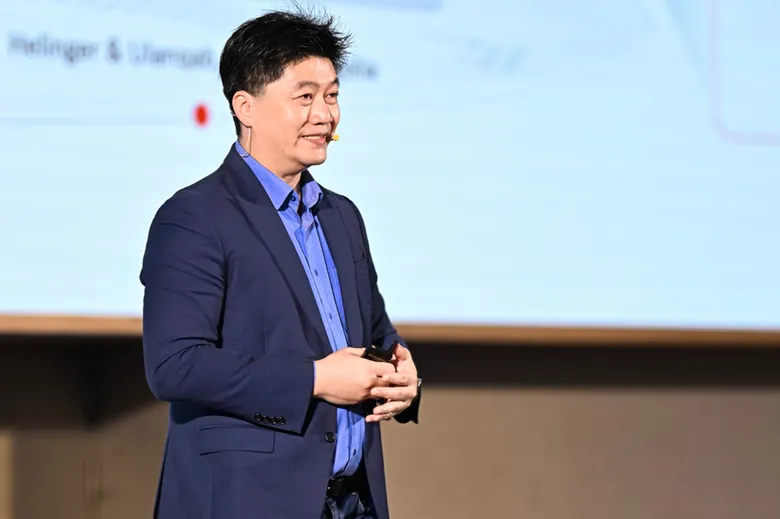
The importance of addressing myopia from childhood is reflected in global trends. An analysis by Holden et al., published in the journal Ophthalmology, projects that by 2050 approximately 49.8% of the world's population may have myopia. Meanwhile, a report by the International Myopia Institute highlights the need to assess risk factors and monitor changes in refractive error on an individual basis. Mr. Wanchat Suchato, General Manager of Thai Hoya Lens Co., Ltd., said, "The key is not to wait until myopia becomes severe before taking action. Instead, children should have their eyes examined, their risk assessed, and a long-term care plan put in place." He added that parents should consider several factors together, including family history of myopia, near-work habits, and time spent outdoors.
In Thailand, systematically collecting data on childhood myopia, screening, and parental understanding will help public health agencies, educational institutions, and the private sector plan educational initiatives and support for eye examinations that better address local needs.
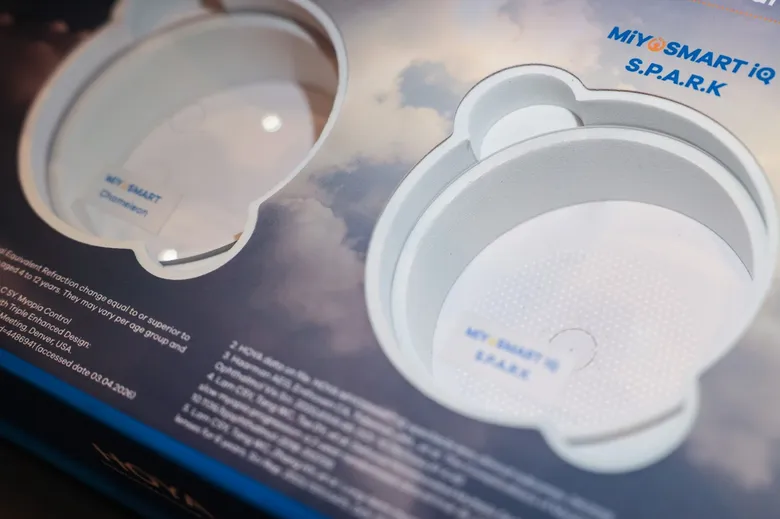
MiYOSMART iQ is a children's spectacle lens designed to help slow the progression of myopia. It builds on MiYOSMART, which uses Defocus Incorporated Multiple Segments (D.I.M.S.) technology. MiYOSMART iQ features D.I.M.S. with Triple Enhanced Design, which combines a clear zone with the management of visual signals on the retina, according to HOYA Vision Care's description of the technology. The new lens is not intended to replace the original MiYOSMART entirely, but to provide an additional option for specialists to consider following an individual assessment. The design differences include a smaller Clear Zone, increased Defocus signal strength, and an expanded myopia management area. Suitability for each child must follow the recommendations and indications approved in Thailand.
The evidence that HOYA Vision Care made public on May 5, 2026, comes from a 12-month randomized controlled study of 202 myopic children aged 4-12 in Hong Kong. The company states that approximately 9 in 10 children in the MiYOSMART iQ group showed no clinically significant increase in myopia over the first year. For axial length growth, the data published by HOYA Vision Care show an average change of 0.075 millimeters in the MiYOSMART iQ group, compared with 0.346 millimeters in the group wearing standard single-vision lenses over 12 months. These are average results for the study sample within the study period and are not a guarantee that every child's myopia will stop progressing or that every child will achieve the same outcome. The study was conducted jointly by HOYA Vision Care and The Hong Kong Polytechnic University, and HOYA presented the results at ARVO 2026. The study by Prof. Carly S.Y. Lam, published in the British Journal of Ophthalmology, provides evidence for the previous-generation D.I.M.S. lens. Results from the two generations should not be used interchangeably.
Ms. Nichakorn Chinadit, Brand Manager of Thai Hoya Lens Co., Ltd., spoke about another element of care: "Our focus extends beyond innovation in the lens itself to include vision measurements and proper spectacle fitting." This launch also introduced the visuReal Move AI with a Kids Module to support fitting-position measurements and frame selection tailored to each child. Myopia care does not end when a child receives a new pair of glasses. Specialists need to monitor changes in refractive error, frame fit, lens positioning, and daily habits to determine an appropriate ongoing care approach based on the child's age and risk profile.
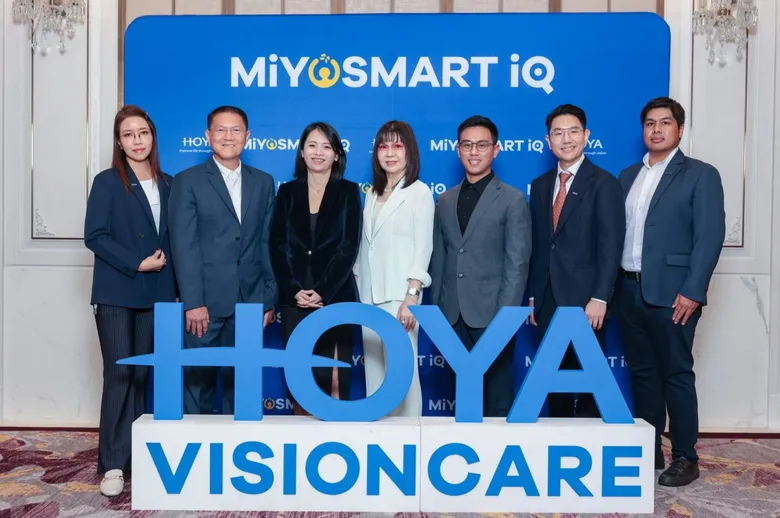
Raising awareness of myopia in Thailand is therefore another important priority for HOYA. Beyond product development, the company aims to communicate with parents, teachers, schools, medical personnel, and vision specialists so that children showing signs of vision problems can be examined and assessed early. The launch event, held under the theme Raising the Bar in Myopia Control, brought together executives, ophthalmologists, vision specialists, and partners to exchange views on managing myopia in children. The event also featured a special online lecture by Prof. Dennis Tse of The Hong Kong Polytechnic University. For more information about MiYOSMART and myopia management, visit the HOYA Vision Care Thailand website. Parents can also consult an ophthalmologist or optometrist about an approach suited to their child's needs.