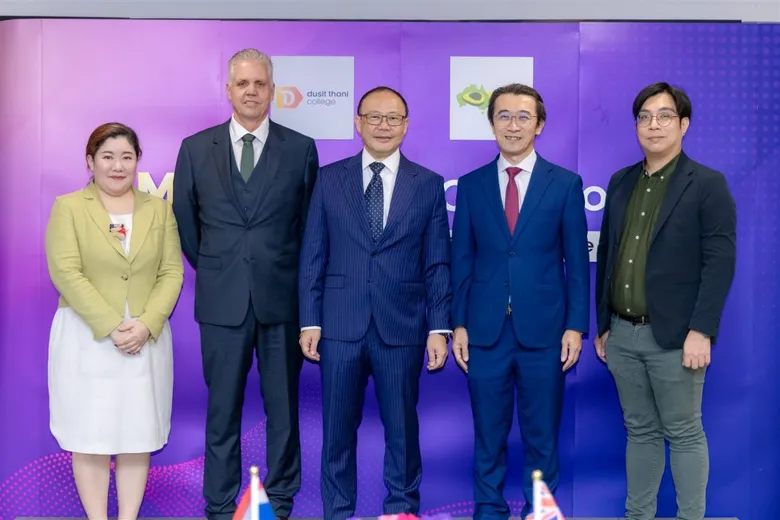
Thailand Faces Challenges of Low Birth Rates and Teenage Pregnancies! Organon, Planned Parenthood Association, and Community Pharmacies Promote
"Family Planning Rights" on World Contraception Day

Thailand is urged to create a support system to enable women to properly plan their parenthood in accordance with their readiness, for a sustainable economic and social future.
Under this year's global theme, 'A Choice for All - Agency, Intention, Access,' the two organisations call on Thailand to build support systems that let women plan their families on their own terms, contributing to a more sustainable economic and social future.
BANGKOK, THAILAND - Thailand is confronting a set of interlinked demographic challenges: an ageing society, a declining birth rate, and persistently high rates of unintended pregnancy. According to the latest data from the United Nations Population Fund (UNFPA) Thailand, the country's total fertility rate now stands at approximately 1.0-1.08 children per woman - well below the replacement level of 2.1 children per woman required to sustain the population over time. At the same time, around 68% of adolescent pregnancies in Thailand are unintended, and 64% of those unintended pregnancies do not result in a live birth.
This paradox points to what is really at stake: Thailand's challenge is not simply how to raise the number of births, but how to ensure that every pregnancy is intended, planned, and supported by informed choice - so that women can plan their lives, education, careers, and families on their own terms.
This 26 September marks World Contraception Day 2026, observed globally under this year's theme 'A Choice for All - Agency, Intention, Access.' In recognition of the day, Organon Thailand - a leader in women's healthcare committed to advancing women's well-being and reproductive health choices - has joined with the Planned Parenthood Association of Thailand and Community Pharmacies Promote to raise awareness of family planning and reproductive choice nationwide. Both organizations emphasise that supporting women's health extends beyond healthcare alone, and is directly linked to human capital development, economic growth, and the country's future.
Thailand continues to invest significantly in health as part of its national development strategy. In 2026, the public health budget is approximately THB 177.6 billion, while annual healthcare expenditure accounts for roughly 4.5% of GDP - reflecting the country's recognition of health as a critical foundation for economic growth and quality of life. The government is also promoting healthcare and wellness as one of Thailand's new growth engines, with ambitions to establish the country as a leading Medical and Wellness Hub in the region.
"Today, we mark World Contraception Day under the theme 'A Choice for All - Agency, Intention, Access.' For Thailand, that choice means addressing two challenges at once: the ongoing issue of unintended pregnancies, particularly among adolescents, and the challenge of managing an ultra-low fertility rate," said Mr. Mo Yasin, Country Lead of Organon Thailand.
"Neither of these challenges can be solved by any one sector alone. It takes collaboration across government agencies, healthcare professionals, businesses, civil society organisations, educational institutions and families to reduce barriers to sexual and reproductive health services, and to create safe environments where women and young people feel comfortable seeking advice," Yasin said.
"One of Organon's global goals is to help prevent 120 million unintended pregnancies by 2030. Achieving that requires close cooperation among governments, healthcare professionals, civil society organisations and women themselves - and our partnership with the Planned Parenthood Association of Thailand is a direct expression of that commitment here in Thailand," he added.
"A comprehensive women's health ecosystem is about more than access to medicines and healthcare products. It's about access to information, healthcare services, counselling and reproductive health options - so that women can make informed decisions about their health, their bodies and their futures, at every stage of life. That is what agency, intention and access really mean in practice," Yasin said
Planned Parenthood Association of Thailand Sets Out Four Approaches to Improve Access to Contraceptive Information
Assoc. Prof. Capt. Dr. Manopchai Thammakhantho President, Planned Parenthood Association of Thailand, said World Contraception Day is an important opportunity to reaffirm people's right to access quality reproductive health information and services - and that achieving this requires cooperation among government agencies, healthcare providers, educational institutions, families, the private sector and civil society, so that knowledge and services reach every population group.
The Association is proposing four key approaches to promote quality family planning:
- Promote practical sexuality education
Provide age-appropriate education on relationships, contraception, sexually transmitted infection (STI) prevention, and bodily autonomy.
- Expand accessible and youth-friendly services
Ensure young people, working adults and vulnerable populations can access contraceptive services conveniently and safely.
- Address misconceptions and encourage shared responsibility
Family planning should be the responsibility of people of all genders, not solely the burden of women.
- Strengthen continuous support systems
Enhance coordination among healthcare systems, educational institutions and communities so people have access to information, choices and appropriate care throughout their lives.
"Discussions about contraception should go beyond simply asking how to prevent pregnancy. People must have sufficient information, understand the available options, and be able to access services in practice. When individuals can plan their futures and families according to their readiness, unintended pregnancies can be reduced, and family well-being can be improved in the long term," said Associate Professor Air Chief Marshal Dr. Manopchai.
Community pharmacies serve as a "frontline" enabling women to safely access healthcare options.
Pharm. Dr. Kritin Banditanukul, Vice President of the Community Pharmacy Association (Thailand), highlighted the key role of community healthcare personnel in family planning. This encompasses counseling on correct contraceptive methods—such as combined or progestin-only oral contraceptives and emergency contraception—along with assessing risks and side effects. It also includes dispensing quality contraceptives and condoms for convenient, safe access, as well as providing professional support through training programs and standard guidelines to ensure community pharmacists deliver friendly, empathetic sexual health services.
Pharm. Dr. Kritin concluded that community pharmacies are the most accessible, safe, and close-to-home touchpoints in the healthcare system. When women or youth face concerns regarding family planning or unintended pregnancy, community pharmacies and pharmacists are often their first point of contact. The pharmacist's role today extends beyond dispensing medication to becoming a friendly, non-judgmental reproductive health counselor who assesses individual health and lifestyle to offer tailored, safe contraceptive innovations. Ultimately, this empowers women to make the best choices for themselves. The association is ready to partner with Organon and network partners to elevate pharmacy capabilities nationwide into safe spaces and sustainable learning hubs for family planning.
A Coordinated, National Effort
By joining forces this World Contraception Day, Organon , Planned the Parenthood Association of Thailand and Community Pharmacies Promote are demonstrating the kind of coordinated, cross-sector approach both organisations say Thailand needs: one that brings together healthcare providers, government, educators, businesses, and communities behind a shared goal - a Thailand where every pregnancy is a choice, and every woman and young person has real agency, intention and access over their reproductive health.